September 4, 2025

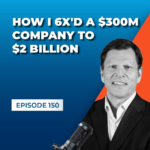
Malcolm Carradus – How I 6X’d a $300M Company to $2 BILLION

James Kennedy sits down with global finance leader Malcolm Carradus to unpack the business of events – from content-led conferences to transaction-driven trade shows – and how he helped scale Informa Markets into the world’s largest events organizer. They get into cash-flow mechanics, venue risk, gross-margin control, and the leadership shift finance teams need when each show runs like its own business. Along the way: wild on-site stories (including a venue demolished three weeks pre-show), why trade shows can command premium EBITDA multiples, and the fractional-CFO playbooks Malcolm now uses with clients.
The Gross Profit Podcast
Malcolm Carradus - How I 6X'd a $300M Company to $2 BILLION
Loading
/

Show Notes

James Kennedy sits down with global finance leader Malcolm Carradus to unpack the business of events – from content-led conferences to transaction-driven trade shows – and how he helped scale Informa Markets into the world’s largest events organizer. They get into cash-flow mechanics, venue risk, gross-margin control, and the leadership shift finance teams need when each show runs like its own business. Along the way: wild on-site stories (including a venue demolished three weeks pre-show), why trade shows can command premium EBITDA multiples, and the fractional-CFO playbooks Malcolm now uses with clients.

About Malcolm Carradus

A chartered accountant turned events-industry CFO, Malcolm spent ~20 years in Asia (largely Singapore) and served as CFO for Informa Markets, helping grow the division from ~$300M to ~$2B revenue and 500 to 5,000 staff. He’s worked across both conferences (content & networking) and trade shows (marketplaces for buyers/sellers), and today runs CFO as a Service, advising scale-ups – many in events – on forecasting, KPIs, pricing, cash flow, and exit readiness.

What You’ll Learn

  • Trade Show vs. Conference Economics: Why conferences sell content & access, while trade shows sell outcomes – and why exhibitors take a “leap of faith” on organizer-delivered demand.
  • Cash-Flow Flywheel: Collect early (“no pay, no play”), pay suppliers later, and why that makes events attractive to PE.
  • Multiples & Moats: Typical EBITDA multiples (trade shows can reach low-to-mid teens; conferences materially lower) and how venue scarcity & multi-year commitments create barriers to entry.
  • Control the Margin, Not Every Line: Set a gross-profit % for each show and empower teams to hit it – because on-site realities shift by the hour.
  • Leading Finance at Scale: Why a CFO in events must be commercial, people-first, and future-focused (pipeline, pricing, cash), not just rear-view reporting.
  • CFO Playbooks that Work: Three-year planning, sale readiness, receivables discipline, and crisp, decision-ready reporting.

Episode Highlights

  • Each show is its own business. Try to standardize everything and you’ll go mad – pick your battles and keep people entrepreneurial.”
  • Set the gross margin target and give teams latitude on how they achieve it.”
  • “Trade shows are a three-day city – buyers, sellers, cranes, food, freight – the works.”
  • “We grew Informa Markets from ~$300M to ~$2B in six years by doubling down on quality portfolios and the sector’s strong cash dynamics.”
  • “Sometimes you just wear the loss to deliver for customers – your reputation outlives the P&L of a single show.”

More About Malcolm’s Role

At CFO as a Service, Malcolm partners with founders and event leaders to:

  • Build rolling forecasts & KPI dashboards tied to pipeline and GP%
  • Optimize pricing, venue contracts, and show P&Ls
  • Strengthen cash conversion (terms, collections, “no pay, no play”)
  • Prepare for M&A / exit with clean data rooms and value narratives
    He also shares practical CFO playbooks (3-year plan, sale readiness, receivables, reporting) that speed up implementation.


The Gross Profit Podcast

More Episodes

Merushka Chetty

Elliott Gaspar – UK’s Secret Weapon Against Silicon Valley

In this episode, James Kennedy sits down with Elliott Gaspar, UK-based Fractional CFO and founder of a fast-growing finance practice, to unpack how the UK’s unique tax-advantaged investment schemes (SEIS/EIS) can accelerate early-stage growth – and how easily founders can lose their eligibility without realizing it.

Drawing on a career that started in Oxford University finance, scaled through private-equity-backed energy infrastructure, and evolved into advising high-growth, asset-heavy startups, Elliott explains why CFOs must be storytellers, how to build investor-ready financial models, and why UK entrepreneurs still underestimate the power of compliance-driven incentives.

They also explore:
– Why the UK remains one of the world’s best places to raise capital
– How founders accidentally invalidate SEIS/EIS (and how to avoid it)
– When asset-heavy roll-ups can unlock better financing
– The role of the Fractional CFO community in raising standards

Listen Now »
Merushka Chetty

Chris Gwinn – CFO Adds $1M EBITDA Without Timesheets

In this episode, James Kennedy sits down with Chris Gwinn, CFA and founder of Midwest CFO, to unpack how a fractional CFO helped a $7.5M digital agency boost gross margins from 26% to 48% and add $1M in EBITDA – without forcing creatives into traditional timesheets. Chris shares why he exited a successful process-improvement consultancy to build a more recurring, finance-driven practice, how he uses podcasts as a growth engine, and the simple pricing and cost-allocation shifts any B2B services firm can use to increase valuation.

Listen Now »
Merushka Chetty

Carolina Aponte – Venezuelan Immigrant’s Rise to Top CFO Success

In this episode, James Kennedy sits down with Carolina Aponte – fractional CFO, founder, and co-host of the Breaking Even Better podcast – to trace her journey from teen tour guide in Venezuela to award-winning North Carolina business owner. Carolina shares how she arrived in the U.S. at 20 without a high school diploma, juggled three jobs to survive, and used night classes plus on-the-job learning to climb from receptionist to controller and ultimately firm owner.

They unpack what a great controller actually does, how finance leaders can influence (but not control!) CEOs, and why relationships, resilience, and “improv” are just as important as debits and credits. Carolina also talks about helping more than 10 clients break the $1M revenue barrier and how her team-based model delivers 90%+ client retention.

Listen Now »